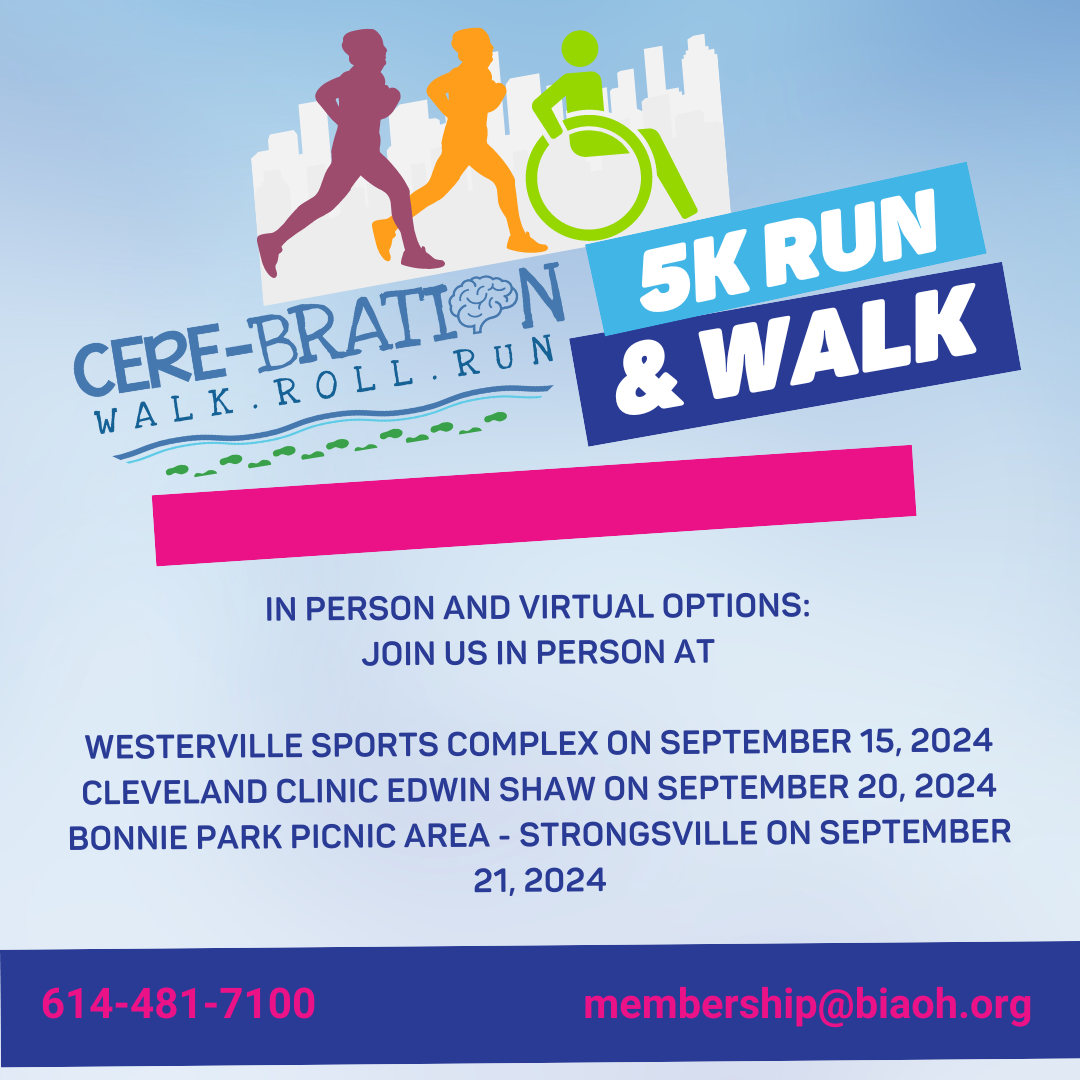
We are thrilled to announce that registration is now open for the Brain Injury Association of Ohio's 2024 Cere-bration Walk, Roll, Run!
This year’s event promises to be bigger and better than ever, and we can’t wait to see you there.
Event Details
Westerville Sports Complex on September 15, 2024
Cleveland Clinic Edwin Shaw on September 20, 2024
Bonnie Park Picnic Area - Strongsville on September 21, 2024
What is the Cere-bration Walk, Roll, Run?
The Cere-bration Walk, Roll, Run is an annual event dedicated to raising awareness and funds for brain injury programs and services throughout Ohio. Whether you’re walking, rolling, or running, your participation helps support the millions of individuals affected by brain injuries.
Why Participate?
Raise Awareness: Brain injuries can affect anyone, anywhere, at any time. By participating, you help shine a light on this important issue.
Support a Great Cause: Funds raised from this event go directly towards programs and services that benefit brain injury survivors and their families.
Community and Fun: Enjoy a day filled with fun activities, food, and entertainment while connecting with others who share a common cause.
How to Get Involved
Register: Sign up today and secure your spot! [Register Here]
Form a Team: Gather your friends, family, or colleagues and create a team. Together, you can make an even bigger impact.
Fundraise: Set up a fundraising page and encourage others to support your efforts. Every dollar raised makes a difference.
Spread the Word: Share this event on social media and invite others to join.
What to Expect
Scenic Route: Enjoy a beautiful course suitable for all ages and abilities.
Entertainment: Live music, family-friendly activities, and more.
Refreshments: Delicious food and drinks to keep you energized.
Inspiration: Hear powerful stories from brain injury survivors and advocates.
Join Us!
Your involvement in the Cere-bration Walk, Roll, Run helps the Brain Injury Association of Ohio continue its mission to improve the lives of those impacted by brain injury. Together, we can make a real difference.
Don't miss out on this incredible event. Register now and start making a difference today!
For more information, contact us at membership@biaoh.org.
Thank you for your support. We look forward to seeing you at the 2024 Cere-bration Walk, Roll, Run!

Fitness and Stroke Prevention: How Exercise Can Safeguard Your Brain Health
In our modern age, where sedentary lifestyles are increasingly prevalent, the importance of physical activity cannot be overstated—especially when it comes to safeguarding our brain health against strokes. Stroke remains a leading cause of long-term disability and death globally, but the good news is that adopting a regular fitness routine can significantly reduce the risk factors associated with this debilitating condition. You should always check with a medical provider before beginning a workout regimen.
Understanding the Link between Fitness and Stroke Prevention
A stroke occurs when there is an interruption of blood flow to the brain, leading to the death of brain cells. Several risk factors contribute to the likelihood of stroke, including high blood pressure, diabetes, obesity, and high cholesterol levels. Engaging in regular exercise is a powerful strategy for addressing these risk factors and enhancing overall cardiovascular health.
How Exercise Mitigates Stroke Risk Factors
Maintaining Healthy Blood Pressure: High blood pressure (hypertension) is a major risk factor for strokes. Exercise helps to lower blood pressure by strengthening the heart, allowing it to pump more efficiently, and improving blood vessel function.
Controlling Blood Sugar Levels: Regular physical activity helps regulate blood sugar levels and enhances insulin sensitivity, reducing the risk of diabetes—a condition that significantly increases the likelihood of strokes.
Managing Weight: Obesity is closely linked to stroke risk. Exercise helps in weight management by burning calories, building muscle mass, and boosting metabolism, thereby reducing excess body fat.
Improving Cholesterol Levels: Physical activity increases levels of "good" HDL cholesterol while lowering levels of "bad" LDL cholesterol and triglycerides, which helps in maintaining optimal cholesterol levels.
Enhancing Circulation: Exercise promotes better blood flow throughout the body, including to the brain. Improved circulation ensures that the brain receives an adequate supply of oxygen and nutrients, reducing the risk of clot formation.
Types of Exercises Beneficial for Stroke Prevention
Aerobic Exercises: Activities such as brisk walking, jogging, cycling, swimming, and dancing elevate heart rate and improve cardiovascular fitness.
Strength Training: Resistance exercises using weights or resistance bands help build muscle mass and increase metabolism.
Flexibility and Balance Exercises: Yoga, tai chi, and Pilates improve flexibility, balance, and coordination—essential for preventing falls that can lead to strokes.
Getting Started with an Exercise Routine
It's important to start slowly and gradually increase the intensity and duration of your workouts. You should always check with a medical provider before beginning a workout regimen. Aim for at least 150 minutes of moderate-intensity aerobic activity (like brisk walking) or 75 minutes of vigorous-intensity activity (like running) each week, along with muscle-strengthening exercises on two or more days.
Regular physical activity is a cornerstone of stroke prevention. By incorporating exercise into your daily routine, you can effectively manage risk factors such as high blood pressure, diabetes, obesity, and high cholesterol levels—all of which significantly contribute to the likelihood of strokes. Remember, it's never too late to start reaping the benefits of fitness for your brain health. Consult with your healthcare provider before beginning any new exercise regimen, and together, let's take proactive steps toward preventing strokes and promoting overall well-being.
Stay active, stay healthy, and let's work together to reduce the incidence of strokes in our community.